With week 2 of the NFL upon us, how can we get better? There's a balancing act between emotional engagement and decision quality. Finding that sweet spot is what unlocks process-driven decision making that is low stress.
Enter the Yerkes-Dodson Law:
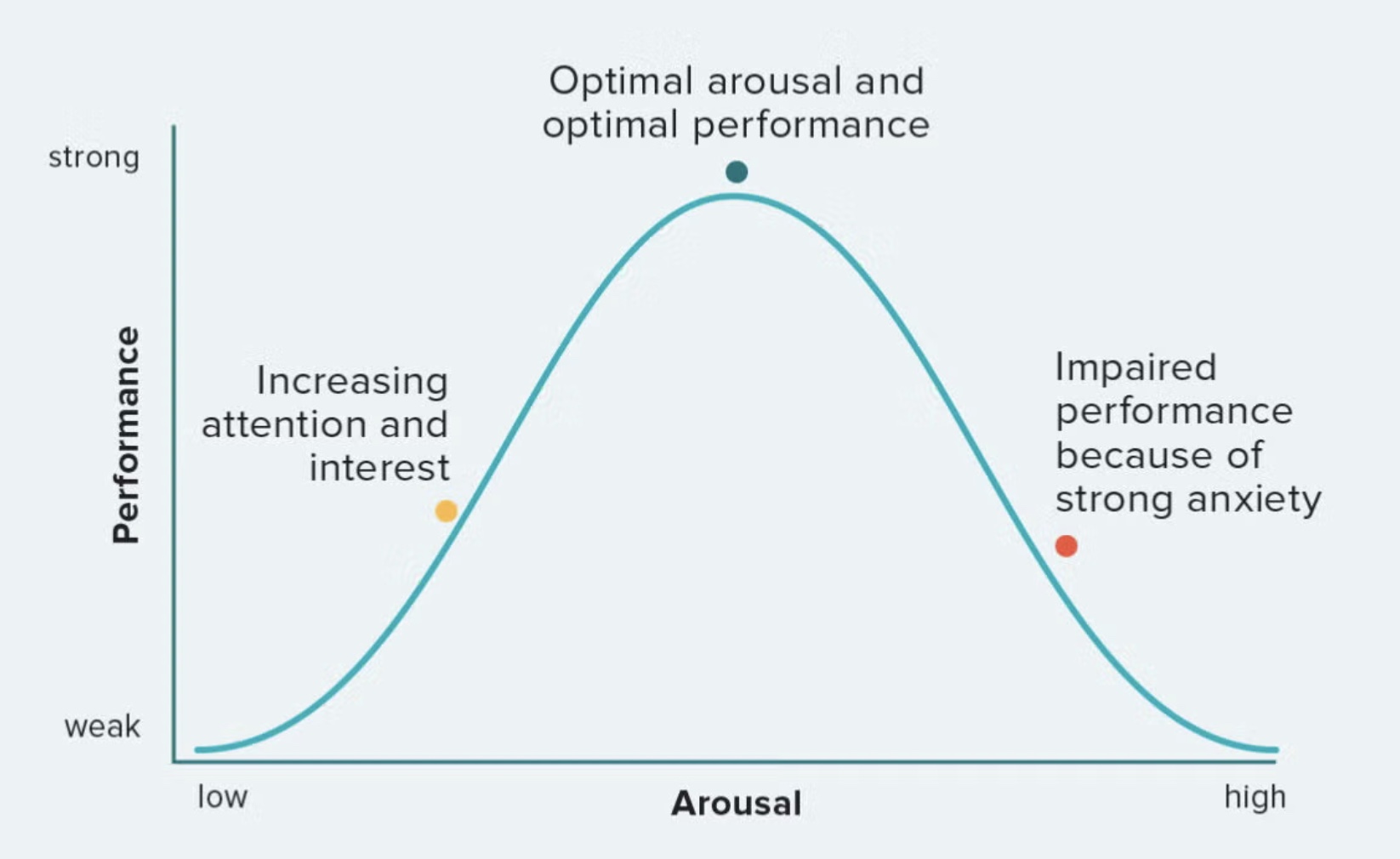
This curve maps human performance against arousal. Arousal starts as interest and, when overdone, turns into stress. Here's how the three colored dots on the curve translate into decision making.
-
🟡 Yellow Zone (Under-Arousal): Boredom and indifference. Decision quality is low because focus is lacking.
-
🟢 Green Zone (Optimal Arousal): Peak cognitive efficiency. A clear focus, analysis, and disciplined process are flowing. BUT there is a limit to this. When our arousal goes into overdrive, we arrive at the red zone.
-
🔴 Red Zone (Hyper-Arousal): Panic, stress, and adrenaline. A bad loss, "need" to make a bet, or a wild winning streak can cause emotional tilt, plunging performance off a cliff.
Low Stress Takeaways
- What's it like to be at the yellow dot? Boring with a capital B. This is when people are looking for a reason to be engaged or to "have a few dollars on the game" to try to make it more interesting. There's no fun in trying to fake analysis to make a boring night more interesting. Instead, stick to your capital allocation rules because that "few dollars" can be put to better use another time.
- How do we stay between the yellow and green dots? Find the sports that are personally interesting, and within those, the specific market(s), that you can learn about and form a position about without taxing your mental reserves. Personally, baseball doesn't even get me to the yellow dot, but NFL bets can get me somewhere yellow or above. It's about staying within your circle of competence.
-
When do we know we've tipped from the green dot toward the red dot? This looks different for everyone, but here are some clues:
- Overanalysis that differs from a standard betting research process
- Feeling the "need" to make a bet (i.e. a hammer looking for a nail)
- Betting on a sport outside of one's circle of competence
- Betting when tired, angry, or any emotion other than clear-headed
- Chasing or trying to get back to even
Low stress doesn't mean zero care; it means operating at the peak of the Yerkes-Dodson curve, where emotional discipline meets systematic decision science.
The LSB Community is Live
This is a dedicated, process-oriented workspace built for serious bettors who treat sports markets like a long-term portfolio—not a noisy gambling forum.
Test drive the tools, sign up for a live case study, and experience the platform 100% risk-free for 30 days.
Thank you for reading this edition of the Low Stress Bets Memo. Reply directly to this email with any thoughts, questions, or feedback—I read every response.
Help this newsletter grow by sharing it with a friend:
 |